Research • Alloy Development • Process Trials
Hot laboratory rolling mills bring rolling, heating and measurement together for elevated-temperature research. Explore reduction schedules, material response and processing conditions with a mill configured around your specimens and test program.
International Rolling Mills designs, builds and refurbishes hot lab mills with application-specific heating, screwdowns, instrumentation and data acquisition. Heated rolls, furnaces and heated entry tables serve different roles; the right combination depends on your material and trial sequence.
Discuss a Hot Rolling Trial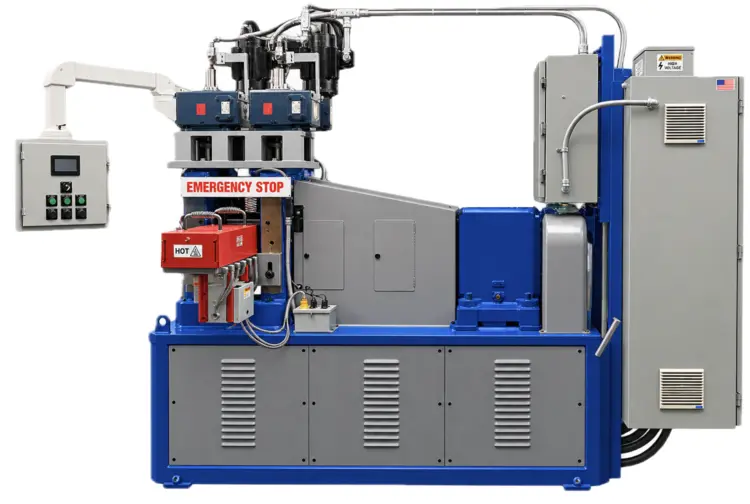
IRM Model 5080. Heating, controls and instrumentation are specified for each configuration.
01 / THERMAL SETUP
A heated laboratory mill should be selected around the complete thermal process, from specimen preparation through the final pass.
Internally heated rolls transfer heat through contact with the material. Preheating the rolls can also reduce the temperature difference when externally heated stock enters the roll bite. Heater arrangement, feedback and control are matched to the selected roll package.
A furnace heats the specimen before rolling. Its placement, the transfer method and time between passes affect the trial. IRM can review furnace supply or integration with your existing laboratory equipment.
A heated entry table places the heating zone close to the roll nip, shortening the distance the specimen travels after heating and reducing the time available for it to cool before the pass. For suitable small specimens and lower-temperature trials, this compact arrangement can provide the required entry heating without a larger standalone furnace at the mill entrance.
This can be especially useful for aluminum and magnesium alloys and selected copper-alloy trials where the required temperature and heat input are within the table's capability. Suitability depends on the specific alloy, specimen thickness, target temperature and soak time; copper-alloy hot-working temperatures can be higher than those of many aluminum or magnesium alloys. A furnace remains appropriate when the specimen needs more heat input, a longer soak or a controlled heating chamber.
02 / INLINE PREHEATING
An inline preheating furnace is a strong option when your trial needs a dedicated heating chamber and a short, direct path into the mill.
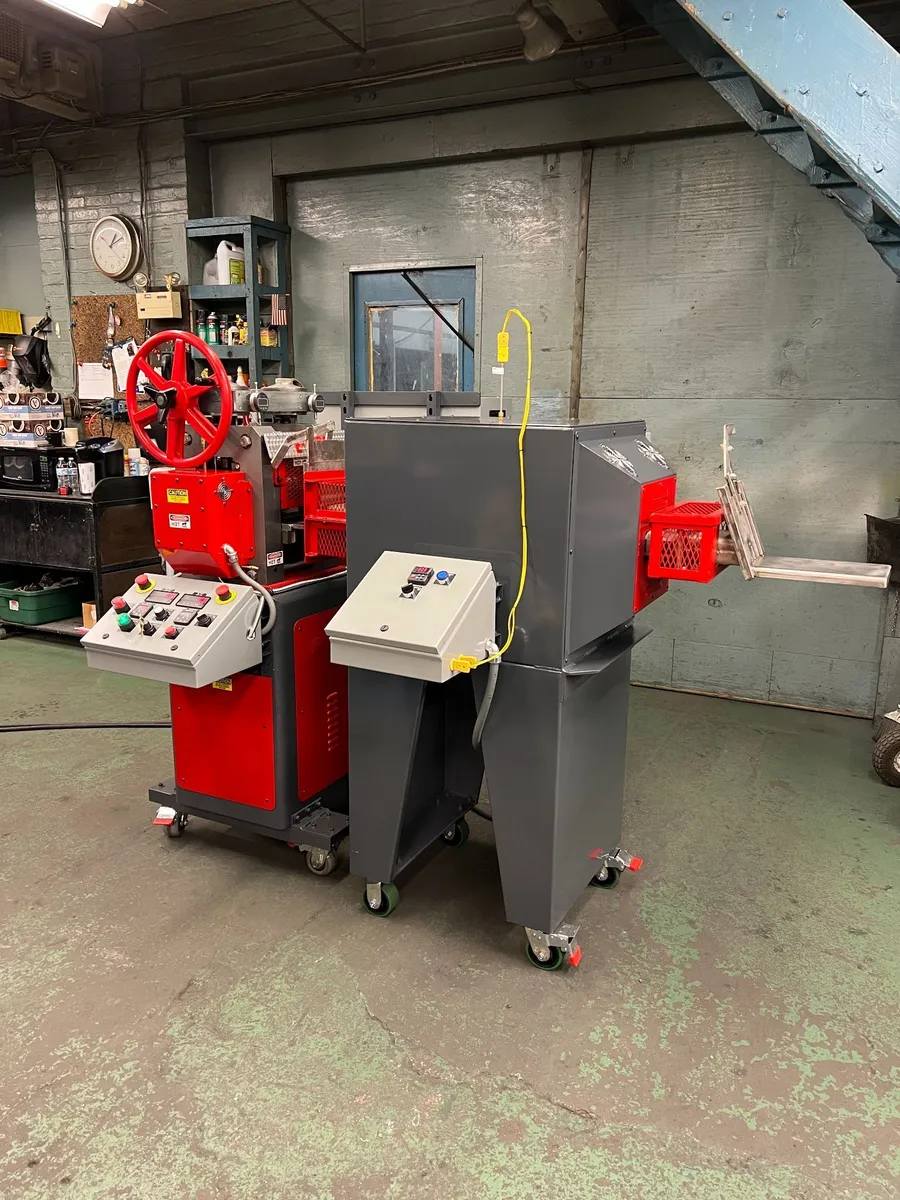
Compact furnace and mill arrangement.
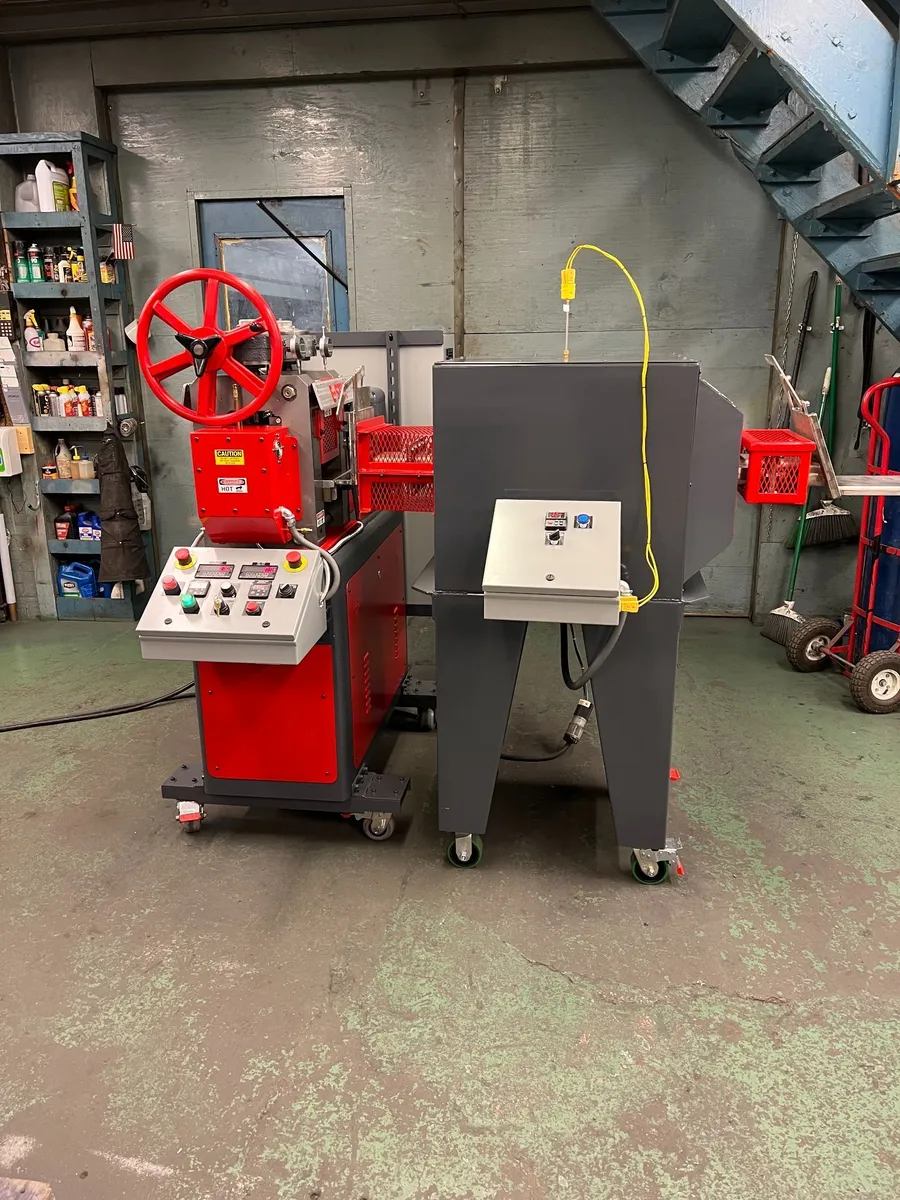
Another view of the furnace positioned at the mill entrance.
Representative photos from the IRM Custom In-Line Push-Thru Preheating Furnace listing. Final chamber, controls and mill integration are configured for the application.
With a separate furnace, the sample must be removed, carried to the mill and positioned for feeding. Aligning the inline furnace exit with the mill entrance shortens that transfer and reduces heat loss before the material reaches the rolls.
The inline arrangement reduces the need to lift, carry and reposition hot specimens between a separate furnace and the mill. The supplied push rod advances samples toward the roll bite, reducing direct handling and opportunities for burns or dropped hot material during transfer.
A defined furnace-to-mill path helps operators repeat the heating and transfer sequence between samples. Chamber size, soak time, pass-line height and the exit-to-nip distance are reviewed together.
The inline furnace provides a chamber-based alternative when a heated entry table cannot supply the required temperature, soak or heating capacity. Its compact placement can avoid a separate furnace station and a longer transfer route. The listed mobile base also allows positioning for mill integration or independent heating trials.
03 / PASS PLANNING
Review specimen size, heating and soak requirements, transfer distance, feeding method and operator access together. Plan the handling arrangement, guarding and temperature measurement around hot specimens and the intended rolling direction.
Define incoming gauge, reduction per pass, rolling speed and the time allowed between passes. Include any reheating steps. Roll materials, available opening, separating force and drive torque must suit the material and process.
Choose a 2-high, 4-high or combination layout to fit the required stock range and reductions. Heating compatibility must be reviewed for the actual work-roll and backup-roll arrangement. Selected platforms also support differential-speed trials.
Manual or power screwdowns and digital position indication can support setup and pass changes. Roll position is a setup measurement; finished thickness also depends on mill loading and material behavior and must be checked separately.
04 / INSTRUMENTATION & DATA
An instrumented hot rolling mill brings process measurements together with the heating and rolling sequence. Configure an instrumented lab rolling mill around the force, torque, position, speed and temperature data needed to compare your trials.
Instrumentation can include separating-force load cells, torque sensors, roll-position indication, speed feedback and temperature measurement. Specify the measurement location, range and recording requirements for each channel.
IRM can configure basic data acquisition or an Ignition-based system around the agreed signals and controls. Available channels, sampling requirements, file export and network integration are defined with the project. A drive-load display is not a substitute for a dedicated torque measurement where the research requires one.
Heating, sensors, power screwdowns and data acquisition are configuration-dependent options, not standard equipment on every listed mill.
05 / RESEARCH IN PRACTICE
The Materials Processing Institute shares thermomechanical treatment trials on reduced activation ferritic martensitic (RAFM) steel for the UK Atomic Energy Authority’s NEURONE project. The work combines a chamber furnace, press forge and rolling mill to study processing routes for advanced fusion-grade steel.
It is a practical example of how heating, deformation and rolling fit into a wider materials-development program.
06 / EXPLORE THE EQUIPMENT
Hot Laboratory Rolling Mill
View Configuration →Custom Laboratory MillsHeating, controls and instrumentation for your research program
Explore Custom Equipment →Refer to each listing and quotation for the supplied configuration.
BATTERY & MATERIALS DEVELOPMENT
For battery electrode research, a suitably configured IRM heated laboratory mill can serve as a heated calender, hot rolling press or heated roller press. These applications combine controlled roll temperature and compression to study electrode thickness, densification and porosity. The required temperature and reduction depend on the electrode formulation, binder, current collector and intended properties.
A laboratory calender should be specified around the complete sample: coated or free-standing sheet, incoming and target thickness, usable width, surface condition and batch or coil format. Review roll finish, alignment, gap control, separating-force measurement and material handling. Evaluate coating integrity and adhesion during trials rather than assuming a thickness reduction alone establishes electrode performance.
For dry-electrode development, describe the condition of the incoming material and whether the task is mixing, film formation, densification or lamination. Each stage can require a different roll arrangement and process setup.
IRM can also review heated lab roller mill and laboratory two-roll mixing mill configurations for mixing and sheet-forming work. Material behavior, batch size and the intended shear or forming action determine the roll gap, operating temperature and drive arrangement.
Where the process requires it, independently controlled roll speeds or a differential-speed ratio can be evaluated alongside separate roll-temperature control. Specify working temperature, viscosity, roll-surface requirements, cleaning, contamination limits and material-retention needs. Heating, cooling requirements, guarding and controls are reviewed for the actual formulation and procedure.
Laboratory Rolling Mills, Calenders & Mixing Applications → | Discuss Your Material & Process →
START WITH YOUR APPLICATION
Help us match the mill, heating and instrumentation to your research program.
We use cookies to improve your experience. Privacy Policy.