
01 / Materials & Layer Arrangement
Identify each alloy, temper, layer thickness and stacking sequence. The starting package and target dimensions establish the geometry the mill and handling system must accommodate.
Equipment for developing and producing roll-bonded materials, configured around the metals, layer arrangement and reduction your process requires.
IRM manufactures new mills and refurbishes suitable existing platforms, with drives, heating, instrumentation and material handling selected as part of the complete system.
Discuss Your Bonding Application →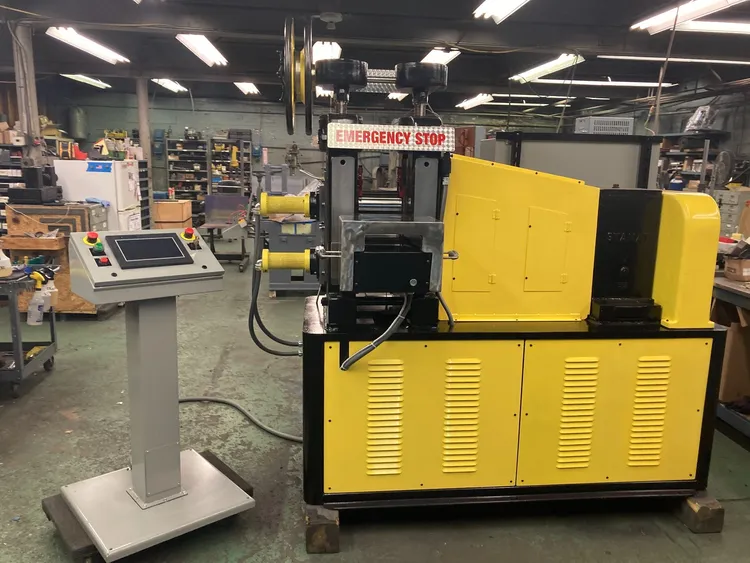
Our former sister company, Metaltek, produced clad metal products. That hands-on production background gives IRM practical experience with the material process as well as the equipment used to run it.
Roll bonding joins prepared metal layers as they pass through a rolling mill under pressure and reduction. The resulting clad material combines layers selected for the properties required in the finished product.
Successful bonding depends on the material combination, interface preparation and processing conditions. Cold and elevated-temperature routes require different equipment and handling decisions. IRM starts with those requirements when reviewing a mill or developing a custom configuration.
Identify each alloy, temper, layer thickness and stacking sequence. The starting package and target dimensions establish the geometry the mill and handling system must accommodate.
Surface condition and preparation affect bonding. Review cleaning, surface treatment, alignment and transfer between preparation and rolling as part of the process, rather than treating the mill as an isolated machine.
The planned reduction must be considered alongside roll diameter, available separating force, torque, speed and entry conditions. A motor rating or roll-face width alone does not establish bonding capability.
For elevated-temperature work, consider heating, transfer time and temperature at the roll nip. Coupon trials and continuous strip require different feeding, alignment, support and winding arrangements.
Accumulative roll bonding (ARB) uses repeated cycles of surface preparation, stacking, rolling and restacking to develop layered materials. Each cycle increases the number of layers and reduces their individual thickness.
For researchers, this makes the rolling mill part of a method for studying how layer structure and processing influence material properties. Consistent setup, sample handling and recorded trial conditions are important when comparing successive cycles.
For ARB equipment selection, review the stack thickness, required reduction, roll opening, force and torque, temperature control and handling between cycles. Load measurement and process data recording can support the research plan; bond integrity and material properties are evaluated separately.
Two-high, four-high and combination mills offer different roll diameters, openings and operating ranges. Smaller work rolls can reduce the load required for a comparable reduction, but the complete drive and roll arrangement must suit the proposed process.
Compare 4-High Mill Arrangements →Work-roll-driven mills transmit torque directly to the rolls contacting the material. Available opening is typically limited by the spindle and drive geometry. Backup-roll-driven arrangements transmit torque through contact with the work rolls, making traction between the rolls an additional consideration.
Load measurement, roll-speed indication, temperature monitoring and data recording can help compare trial conditions. Bond quality and finished dimensions require their own evaluation; machine readings alone do not demonstrate a successful bond.
Develop the roll package, drive, controls, heating and material handling around the intended material system and operating sequence.
Custom Equipment Design →Evaluate a suitable existing mill for mechanical condition, capacity and the changes required. IRM’s in-house shop supports repairs, replacement components and integration.
Refurbishment & Upgrades →Discuss trial objectives, measurements and equipment options with a team whose background includes actual clad-metal production through Metaltek.
Technical Consulting →Share the material combination and target product so we can review the appropriate mill configuration, available equipment or a custom build.
Discuss Your Cladding Project →We use cookies to improve your experience. Privacy Policy.