


IRM Model 4258 4.25" x 8" 2-High Rod Lab Rolling Mill
Have one to sell?
ConditionUsed
1 available
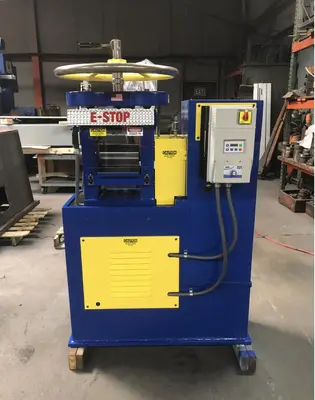
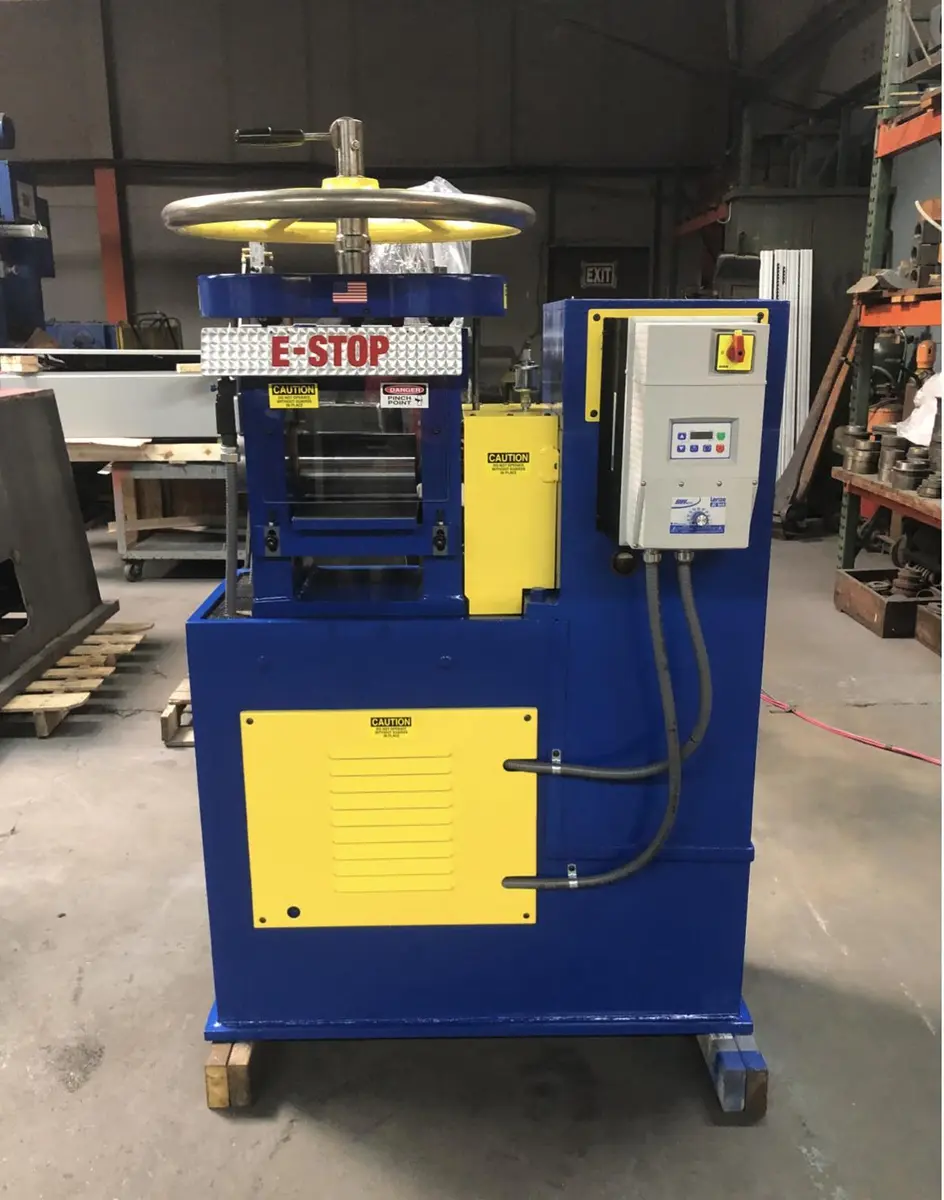
IRM Model 4258 4.25" x 8" 2-High Rod Lab Rolling Mill
The IRM Model 4258 4.25" x 8" 2-High Rod Lab Rolling Mill is a robust, industrial-grade rolling mill engineered for laboratory, R&D, pilot-scale, and specialty rolling applications. This machine bridges the gap between bench-scale lab mills and production equipment, delivering the stiffness, torque, and separating-force capacity needed for controlled reduction of rod, bar, and wire, while retaining the precision and process control researchers depend on for repeatable metallurgical work.
With 4.25" diameter rolls, an 8" roll face, and approximately 75,000 lbs of separating force, the 4258 offers substantial roll-bite capacity and load capability, making it well suited for processing higher-strength alloys, running aggressive pass schedules, and supporting pilot and pre-production trials where lab results need to scale toward manufacturing.
The rolls are precision-ground with a series of modified square grooves running from approximately 10mm down to 1mm, allowing progressive reduction through a single roll set without changing tooling between passes. The larger grooves handle rod and bar stock, while the smaller grooves move down into wire sizes, giving the operator a wide working range across one set of rolls. Roll gap is adjustable both simultaneously and independently, giving the operator fast centerline height changes as well as fine control over parallelism and wedge across each pass.
The mill is powered by a 7.5 HP drive with all new electrical controls and a new variable-speed AC inverter supplied as standard, providing smooth, high-torque operation across the full speed range. This drive configuration enables precise speed control and stable low-RPM rolling, which is critical when processing thicker stock, higher-strength alloys, or running experimental pass schedules. A rigid industrial frame, precision roll alignment, and robust bearing arrangement allow the mill to maintain roll geometry under load, supporting consistent reductions, improved surface quality, and dependable results across multiple trials. Entry and exit tables are installed to support material handling through the roll bite, and all nip points are guarded for safe operation. The machine runs on 220V 3-phase power, measures approximately 42" L x 32" W x 60" H, and weighs approximately 2,000 lbs.
Key Features
2-High rod rolling configuration for laboratory, R&D, and pilot-scale use
4.25" diameter x 8" face rolls with modified square grooves, approximately 10mm down to 1mm, for rod, bar, and wire
Approximately 75,000 lbs separating force capacity
7.5 HP drive with new variable-speed AC inverter and new electrical controls
Roll gap adjustable simultaneously or independently for precise thickness and parallelism control
High-torque, low-speed capability for controlled rolling of demanding materials
Rigid industrial frame designed for stability under high separating loads
Entry and exit tables installed for material handling
Guarded nip points for safe operation
220V, 3-Phase
Available Optional Features & Upgrades
Heated Roll Package: Cartridge-heated rolls with closed-loop digital temperature control to a maximum roll temperature of 450°F for warm and hot rolling
Spare Set of Hot-Work Rod Rolls: Additional precision-ground rod rolls made specifically for hot work, for reduced downtime and faster changeovers
Load Cell Package: Integrated separating force measurement with digital readout for real-time process monitoring and overload protection
Standard Data Acquisition System: Touch screen HMI with continuous data logging to SD card in Excel format for full process traceability
A Note on the Rod Rolls and Hot Rolling
The rod rolls supplied with this mill are not a dedicated hot-work roll material. For hot rolling, the best setup is the heated roll package combined with the spare set of hot-work rod rolls. The heated rolls bring the hot-work rolls up to temperature before rolling, which minimizes thermal shock, and the hot-work material holds up under sustained high-temperature use, giving the longest roll life and the most stable process. At minimum, hot rolling should be done with either the heated roll package or the hot-work rod rolls. The heated roll package preheats the standard rolls and gives them a reasonable service life under hot work, while the hot-work rod rolls are built to withstand the heat directly. Hot rolling on the standard rolls without preheating subjects them to severe thermal shock from contact with hot stock and will significantly shorten roll life.
Built for Research-Grade Rolling
The IRM 4258 is designed for engineers, metallurgists, and researchers who require controlled rolling conditions, meaningful torque and force capacity, and optional instrumentation. Its configuration allows the mill to operate as a straightforward rod and wire rolling platform or expand into a fully instrumented research system as application needs evolve, supporting repeatable, data-driven process development at a scale that translates toward production.
Images shown are representative of the machine. The actual mill may differ in appearance based on configuration, options, and final build.
We use cookies to improve your experience. Privacy Policy.